
The Nuclear Order and the Arms Race
American PrometheusThis thread traces Oppenheimer’s changing assessment of international control, deterrence, and the possibility of a stable nuclear order.
increasing Bearing strength in each event
 decreasing
Bearing strength in each eventdecreasingAn International Authority
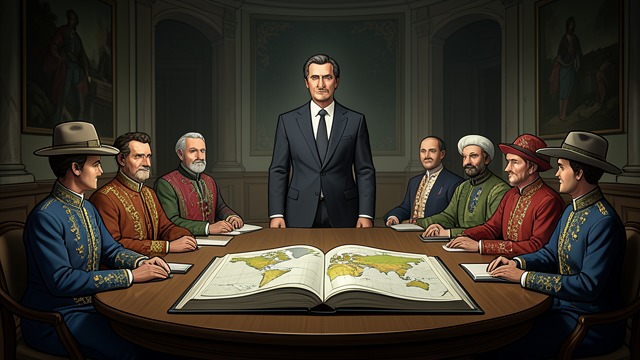
An International Authority
Shared control
Oppenheimer proposed an international authority controlling nuclear materials and directing peaceful development. He believed transparency could prevent secret bomb production.
A radical compromise
The scheme required states to surrender part of their sovereignty. Its ambition reflected his conviction that ordinary diplomacy was inadequate to a technology that threatened civilization.
The Soviet Rejection

The Soviet Rejection
Rival proposals
Baruch’s version demanded penalties and restrictions that appeared to preserve American advantage. The Soviet Union offered a simpler ban on atomic weapons.
A breakdown of trust
Neither side accepted the other’s terms. Oppenheimer saw the negotiations as a missed chance to start a different kind of relationship before the arms race hardened.
From Monopoly to Competition
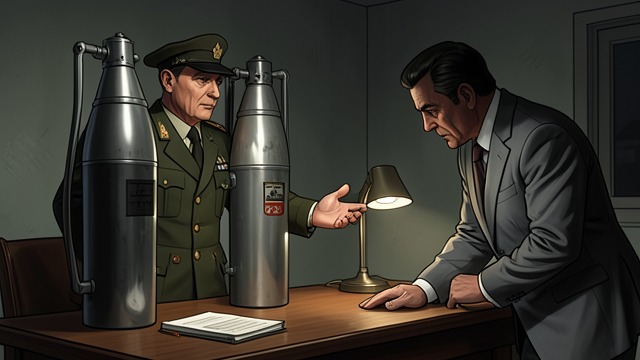
From Monopoly to Competition
A new strategic landscape
The Soviet atomic test ended the United States’ monopoly. Oppenheimer expected this development and hoped it would force a more rational policy.
More weapons instead
The administration responded with an expansion of the stockpile and a push toward the Super. Nuclear competition began to replace the international authority Oppenheimer had advocated.
The Scorpion Stalemate

The Scorpion Stalemate
Mutual danger
Oppenheimer described the United States and Soviet Union as two scorpions in a bottle, each able to kill the other only at its own risk. The metaphor rejected any simple promise of victory.
Security redefined
He argued that safety required more than accumulating weapons. His analysis anticipated a nuclear stalemate in which restraint, communication, and judgment mattered as much as military capacity.
An Arms Race Accepted
An Arms Race Accepted
A reluctant accommodation
Oppenheimer gradually accepted that the United States would maintain nuclear forces. He still warned that superiority could not provide lasting protection from nuclear destruction.
A warning without power
After losing clearance, he could no longer shape policy from within. The widening arsenal made his warnings appear prescient but increasingly powerless.
1946, during the Acheson-Lilienthal planning
1946, after Baruch presented the U.S. plan
1949, after the Soviet test
1953, during the debate over nuclear strategy
1954–1967, after Oppenheimer’s influence was curtailed
